Automation + applied research for specialty crops
Practical technology for resilient growing.
Working Theory brings engineering, sensing, applied research, operations, and stakeholder engagement together around practical challenges in high-value perennial specialty crops.
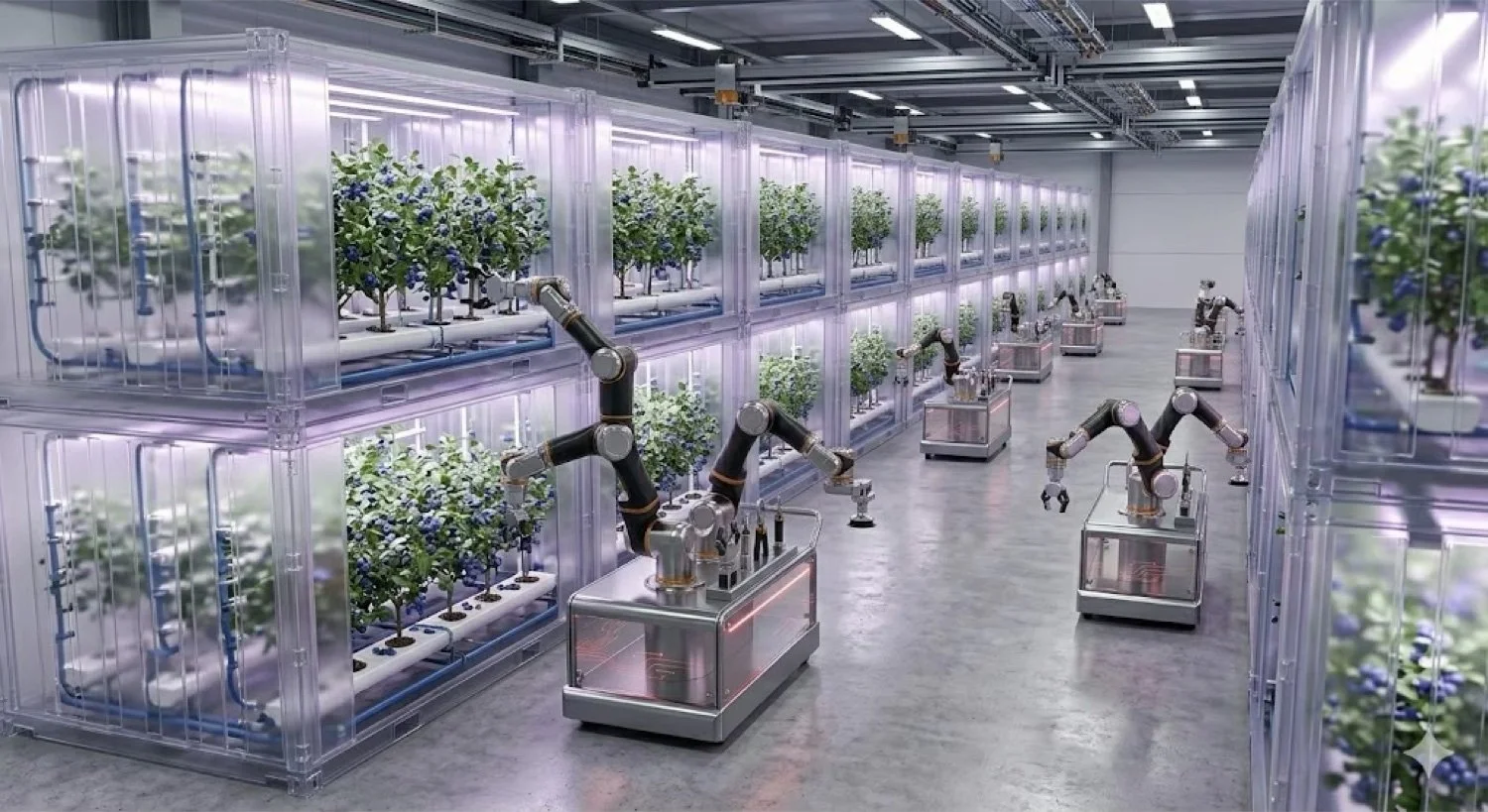
Illustrative concept only—not an operating Working Theory facility or validated system design.
Capabilities
Engineering the connection between crops, systems, and people.
These categories describe areas for collaboration and investigation. They are not packaged products, pricing offers, or validated performance claims.
Adaptive growing environments
Explore ways to observe and manage growing conditions around perennial specialty crops while accounting for crop needs, operator use, and the realities of existing production settings.
Field and facility automation
Evaluate where automation may assist repetitive or timing-sensitive crop observation, care, and harvest-related work while keeping safe human oversight central.
Integrated research platforms
Consider pilot environments that bring sensing, environmental management, automation, crop knowledge, and structured operator feedback into one testable research setting.
Crop-quality decision support
Study how responsibly collected crop and process information could help growers and agricultural organizations make more consistent operational decisions.
Why this work matters
Practical fit comes before technical complexity.
Perennial specialty crops combine long production cycles, timing-sensitive care, changing environmental conditions, labor pressure, and demanding quality expectations. Useful technology has to address those conditions without creating a new burden for the people operating it.
Start with the operating need
Research questions should come from observable production, quality, workforce, or decision-making needs—not from a technology looking for a use.
Connect disciplines early
Mechanical systems, sensing, controls, crop knowledge, operations, and stakeholder feedback are considered together so that one discipline does not become the entire solution.
Development approach
From a practical question to evidence that can be evaluated.
- 01Define the needClarify the operating problem, intended user, and limits of the work.
- 02Set measuresIdentify useful technical, crop, usability, and adoption measures before making claims.
- 03Build carefullyDevelop an appropriately scoped concept or prototype with information safeguards in place.
- 04Evaluate fitUse relevant testing and structured stakeholder feedback to understand performance and usability.
- 05Share responsiblyPublish only findings and operational guidance that are validated, approved, and safe to release.
People who inform the work
Research improves when the full operating context is represented.
Exploratory coffee research
A measured approach to crop and roast decisions.
Working Theory is exploring how responsibly collected crop and process information could support more consistent coffee and roast decisions. Questions may include which measurements are repeatable, how growing and roast conditions relate to observable quality outcomes, and whether the resulting information is useful to producers and operators. This work remains exploratory and is not currently offered for sale.
- 01Begin with a research question, not a performance claim.
- 02Define what information is safe and appropriate to collect.
- 03Compare observations using a documented evaluation approach.
- 04Describe a concept as proven only after appropriate validation and review.
Start a conversation
Tell us what you are trying to understand.
Use the form below for a general research, technical, stakeholder, partnership, media, privacy, or accessibility inquiry. Please do not submit confidential, regulated, or patent-sensitive information.
Let’s Work Together
Reach out for more information & collaboration requests